
TILE ROOFS
Concrete Tile Moss Removal
Tile carries more growth than it looks like it does. The cleaning is straightforward; the care goes into where the weight lands, because tile cracks quietly.
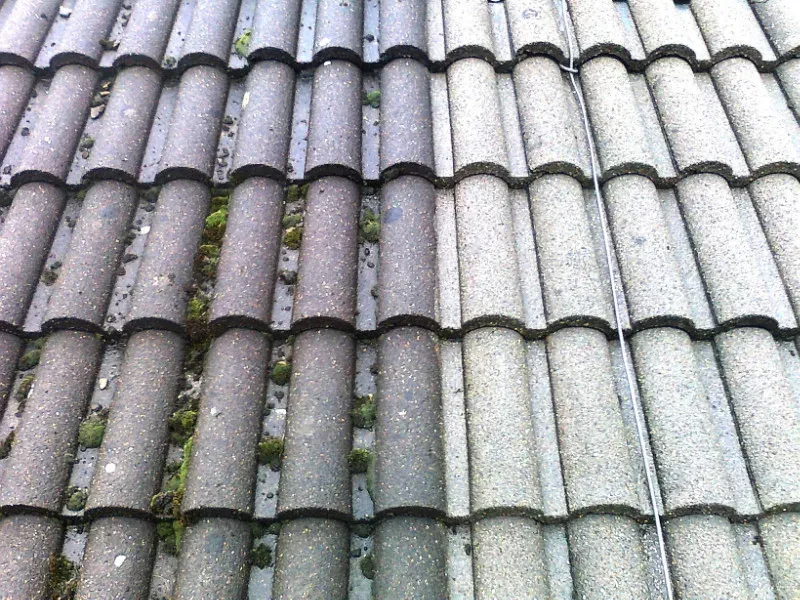
A concrete tile roof carries more growth than it looks like it does. The tiles are large, the profile hides a lot, and from the ground a roof that is genuinely packed can read as merely dark.
The cleaning itself is the easy part. The care goes somewhere else entirely.
Where the growth actually is
On the face of a tile, growth is cosmetic. Concrete does not mind it.
In the laps — the overlap where one tile sits over the next, and where one column of tiles meets the one alongside — it is a different matter. That overlap is a drainage path. Water running down the roof is meant to pass through the laps and off the tiles below, and growth packed into a lap turns a path into a pocket.
Underneath the tiles is the underlay, and the underlay is the layer with an actual life span. Tiles will outlast it comfortably. Water standing where it should have been moving is how the underlay gets asked to do more than it was meant to.
So the work goes into the laps and the pans rather than the faces, and the faces come clean as a consequence.
The part that takes the care
Concrete tile cracks under a foot placed in the wrong part of the tile. It does not crack loudly, and it does not leak immediately — the water goes onto the underlay, spreads, and shows up on a ceiling a year later somewhere that makes no sense.
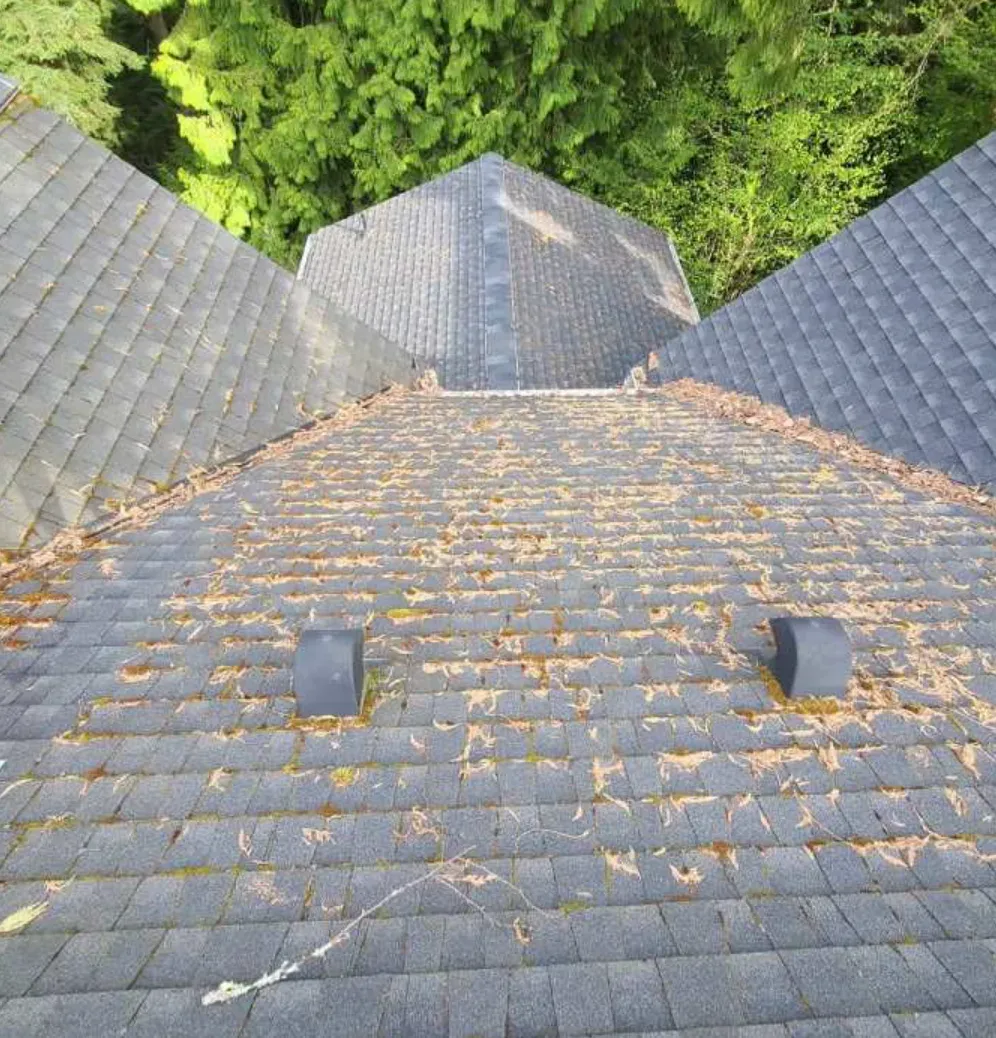
That is the whole reason a tile roof takes longer to plan than to clean. Weight goes over the batten line, in the lower third of the tile, on the route worked out before anyone steps up. On a complex roof with hips, valleys and a couple of changes in pitch, that route is most of the thinking.
Anything cracked or slipped gets flagged, including the ones that were already like that when we arrived — and we will tell you which we think are which, because an old break is weathered and dirty along its edge and a fresh one is not.
What is under the tiles matters more than the tiles
A tile roof is really two roofs. There is the tile, which is doing the shedding, and there is the underlay beneath it, which is the actual waterproof layer for anything that gets past.
Concrete tile lasts a very long time. Underlay does not — on a roof from the eighties or nineties it may already be well past its intended life, and it is the thing that fails while the roof still looks perfect from the street.
That changes what is worth looking at on a visit. Growth packed into the laps matters because it puts water onto the underlay rather than off it. Cracked tiles matter for the same reason. Neither is a tile problem; both are underlay problems arriving through the tiles.
Where we can see the underlay — at the eaves, around vents and skylights, anywhere a tile has slipped — we will tell you what state it looked to be in.
Clean without soaking it
Tile tolerates more water than cedar or shingle, and that is not a reason to use more. Water driven into a lap under pressure ends up on the underlay, which on a roof of any age is exactly the layer you would rather keep dry.
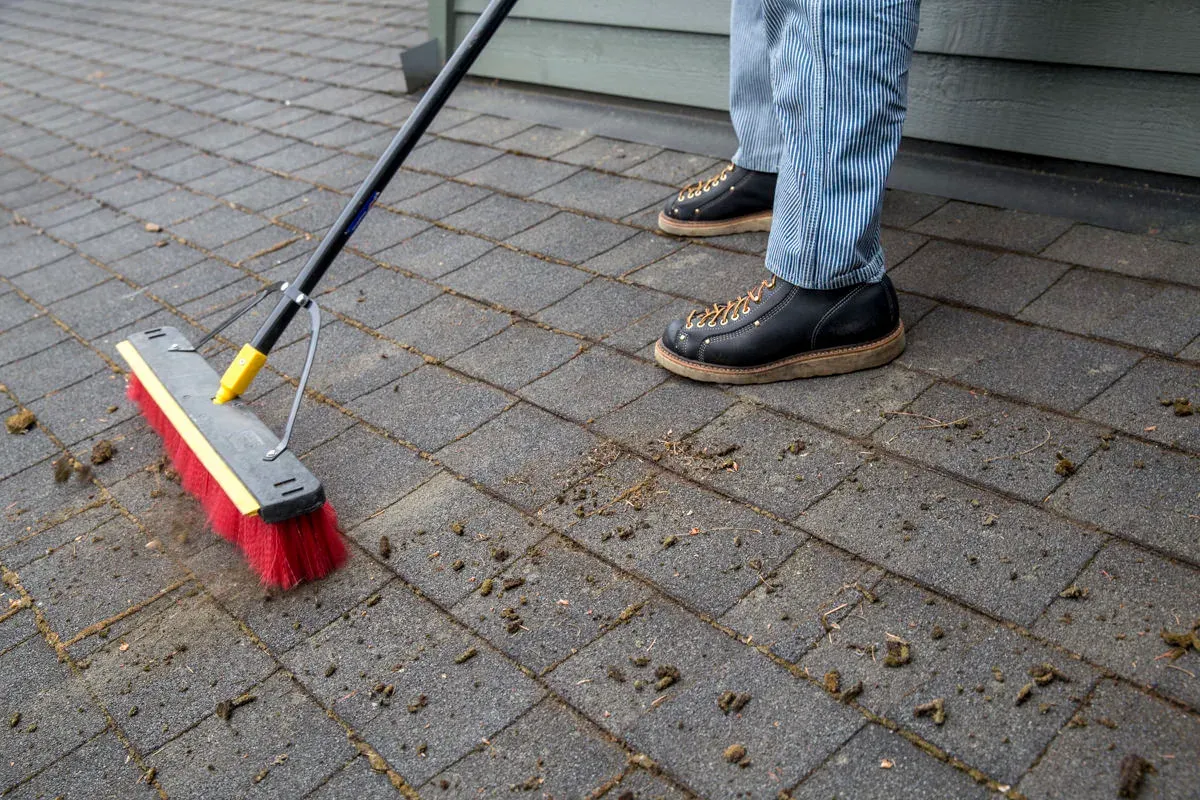
The growth comes out of the laps by hand, the pans are cleared down their length, and what comes loose goes off the roof rather than washing down into the next lap or into the gutter.
What we tell you afterwards
Which slopes were worst, whether anything is cracked or slipped, and what could be seen of the underlay at the eaves and around any penetrations. Tile roofs are usually the ones where the covering is in better shape than the layer under it, and knowing that is worth more than a clean roof.
Different covering? See cedar shake or asphalt shingle.
Got questions?
Concrete Tile — questions
What is the real risk on a tile roof?
Walking it. Concrete tile cracks under a foot in the wrong place, and a cracked tile does not announce itself — it lets water onto the underlay and stays quiet for a year. Foot placement is planned around the batten line before anyone steps up.
Does moss actually hurt a tile roof? The tiles are concrete.
The tiles are fine. What is not fine is growth packed into the laps where one tile sits over the next, because that is where water is meant to pass through and where it will instead sit. Below that is underlay, and underlay is the part with a life span.
Can tile be pressure washed?
It tolerates more than shingle or cedar, but tolerating it is not the same as needing it. Pressure drives water into the laps and under the tiles, and on an older roof that means water on underlay that may already be brittle. We clear by hand and use as little water as the job needs.
You found cracked tiles. Were they already there?
Usually, and we will tell you which we think were and why. Old cracks are dirty and weathered along the break; fresh ones are clean. Either way you get told, because a cracked tile is a slow leak whoever put it there.
Are there spare tiles for a roof like mine?
Often not in the same colour, because concrete tile fades over decades and profiles get discontinued. It is worth checking whether there is a stack of spares in the crawlspace before you need one — a lot of houses were left a dozen and nobody remembers.
Is clay tile the same job?
Similar in principle and less forgiving in practice. Clay is more brittle than concrete and older clay roofs are usually on older battens. We will look before we commit to walking one.
Customer reviews
What customers say
“Great job and fair pricing! Will hire again!”
“The service provided by the owners of the company and the staff were beyond exceptional. The price was also very exceptable and affordable.”
Concrete Tile in Victoria and the surrounding area
Tell us the address and we will get you a price.