
FRAMES AND SILLS
Window and Skylight Moss Removal
Growth on a frame or a sill sits in the joint and holds water against the joinery. We clear frames, sills, trim and skylight kerbs without soaking the seals.
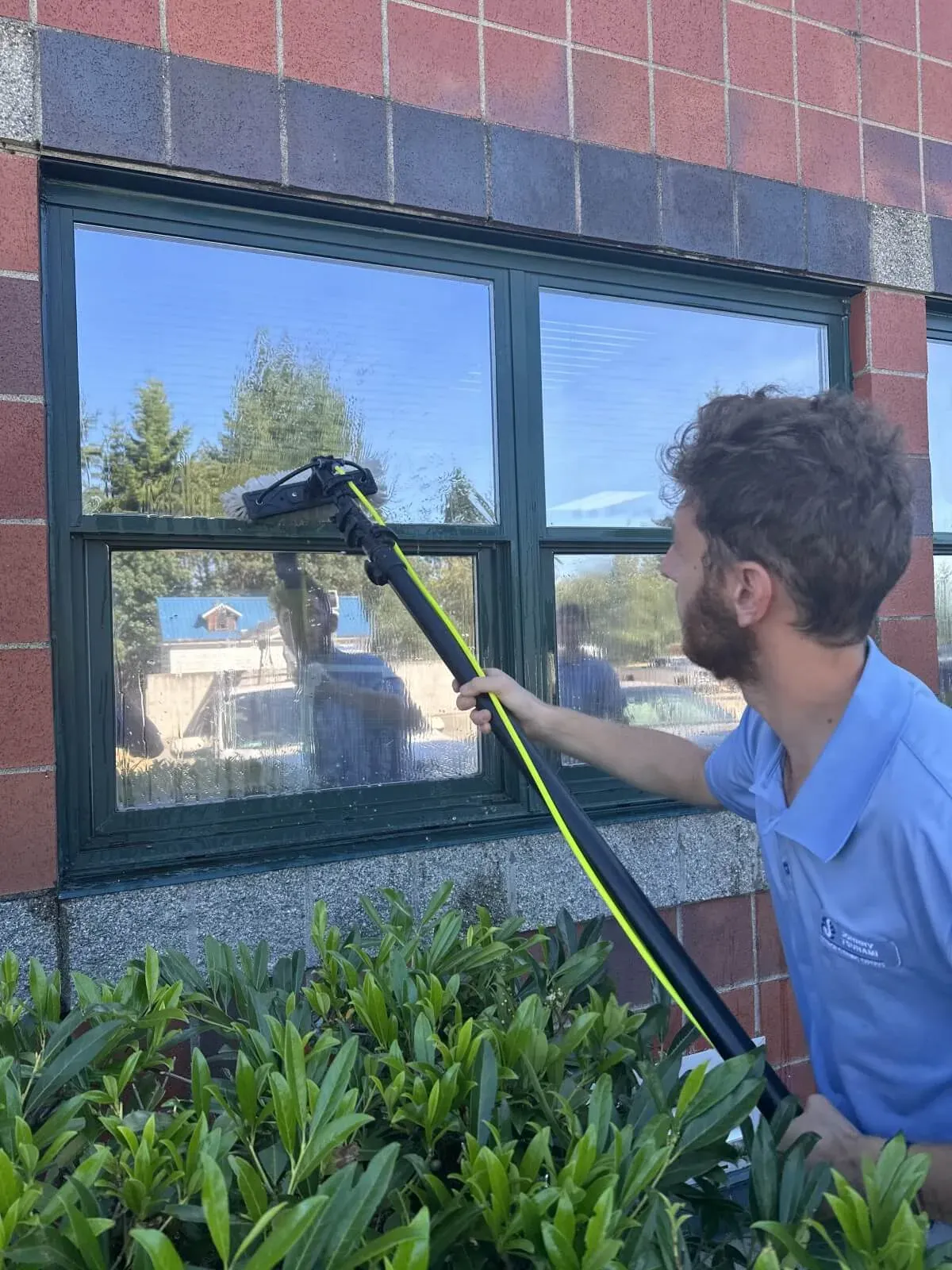
This is the small-scale end of the same problem. A window frame is not a roof, but a frame corner is a shaded, sheltered joint that holds damp for months, and that is all growth ever needs.
On most Saanich houses it shows up in the same places. The north and east elevations. Anywhere an overhang keeps the rain off but keeps the sun off too. Behind a hedge or a laurel that has been allowed to grow up close to the wall. Ground-floor sills where splash-back off a path keeps the bottom edge wet all winter. And skylight kerbs, which are shaded by nothing and still manage it, because a kerb interrupts the flow of water down a slope and everything upstream of it stays wet a little longer.
What the growth is doing there
On a frame, the concern is not the material the moss is sitting on. It is the joint underneath it.
Growth in a corner holds water against the joint the way a sponge does, and it keeps holding it long after the wall has dried. Painted wood loses the paint film first and then the wood goes soft behind it, usually starting at the bottom corners where water collects. Vinyl and aluminium frames do not rot, but the weep slots along the bottom of the frame are small, and a slot packed with growth stops draining. Water that cannot leave a frame at the bottom finds another way out.
None of that is fast. It is the kind of thing that costs a window ten years early rather than a window this winter — which is exactly why it goes unnoticed until the joinery is already soft.
Close work, controlled water
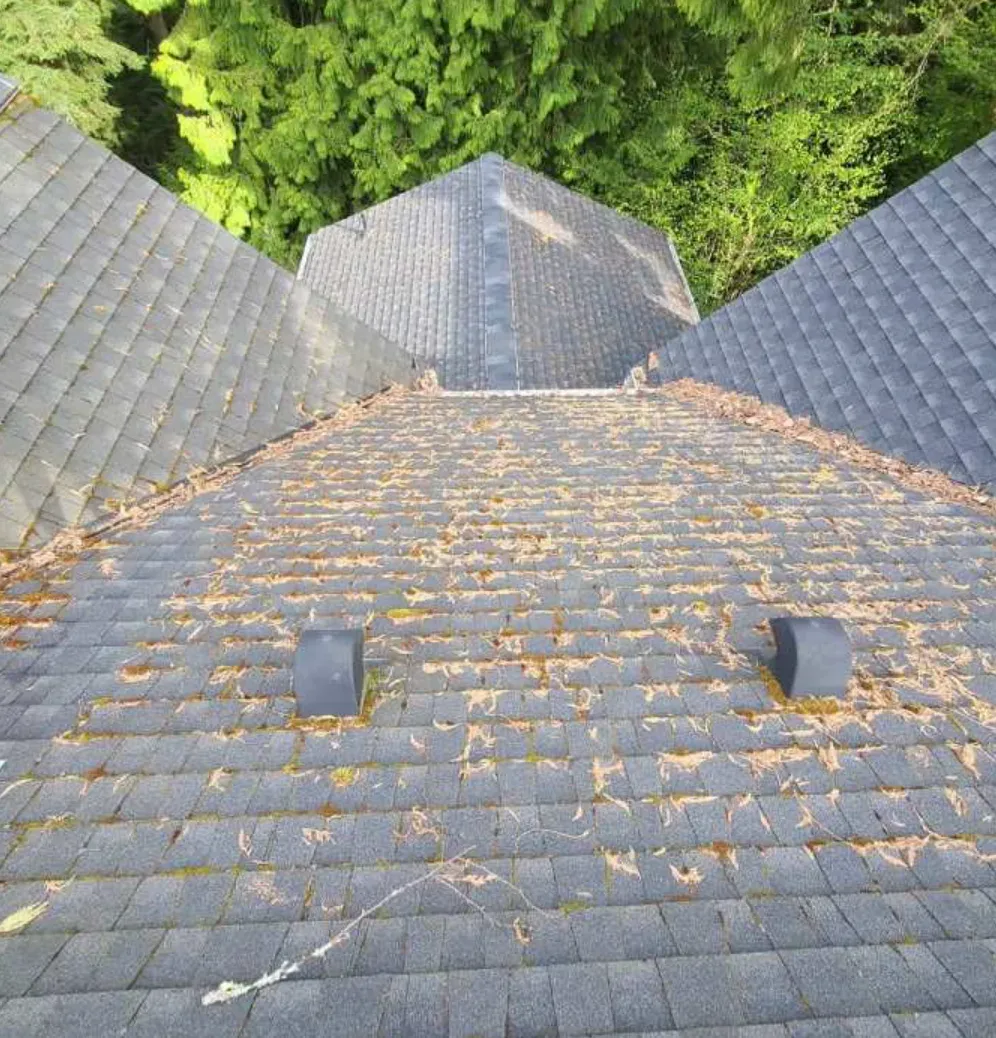
The method here is the opposite of the driveway. Everything is done close, by hand, with the water controlled and kept to what is needed.
There is a good reason for that restraint. Old wooden sashes, any double-glazed unit with a seal already gone, and the head of any opening that sits under a soffit are all places where water pushed in does more harm than the growth ever did. Where a window looks marginal we use less water rather than more, and we would rather leave a faint stain on a sill than fill a cavity that has no way of drying out.
Sliding door tracks get the same treatment, and they are worth mentioning separately because a packed track is the one piece of this that people notice daily — the door that has become heavy to slide usually has a track full of grit and growth rather than a roller problem.
Skylights and the kerb
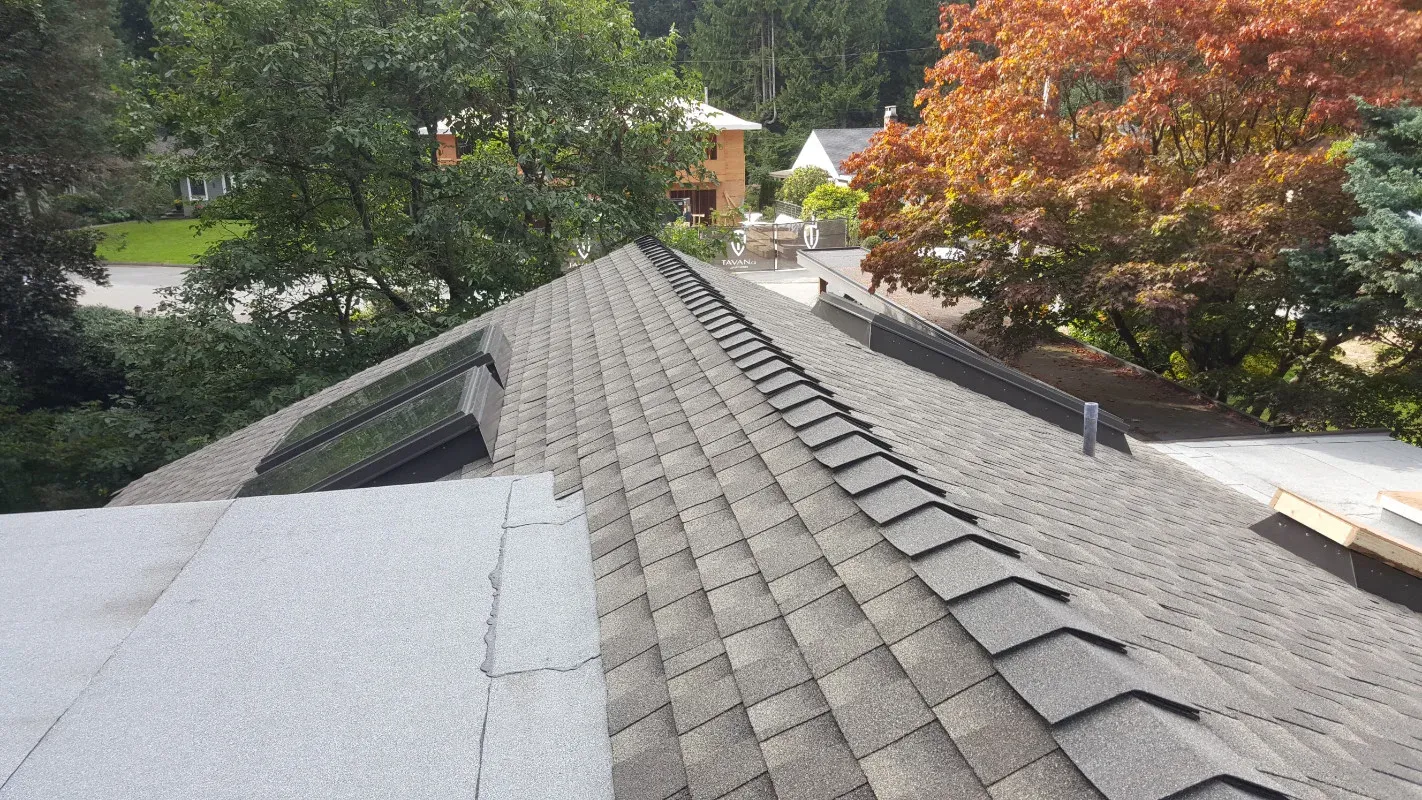
A skylight is a hole in a roof with a raised kerb around it, and everything running down the slope has to go around that kerb. That makes the upslope side of it a natural collecting point for needles, grit and growth.
Packed material there holds water against a flashing joint. Flashing is good at shedding water that is moving and much less good at water that is standing, so this is one of the few places where growth on a narrow surface has a direct route into the building. We clear the kerb, the flashing edge and the upslope side properly whenever we are on a roof with skylights in it.
Algae, which is not moss
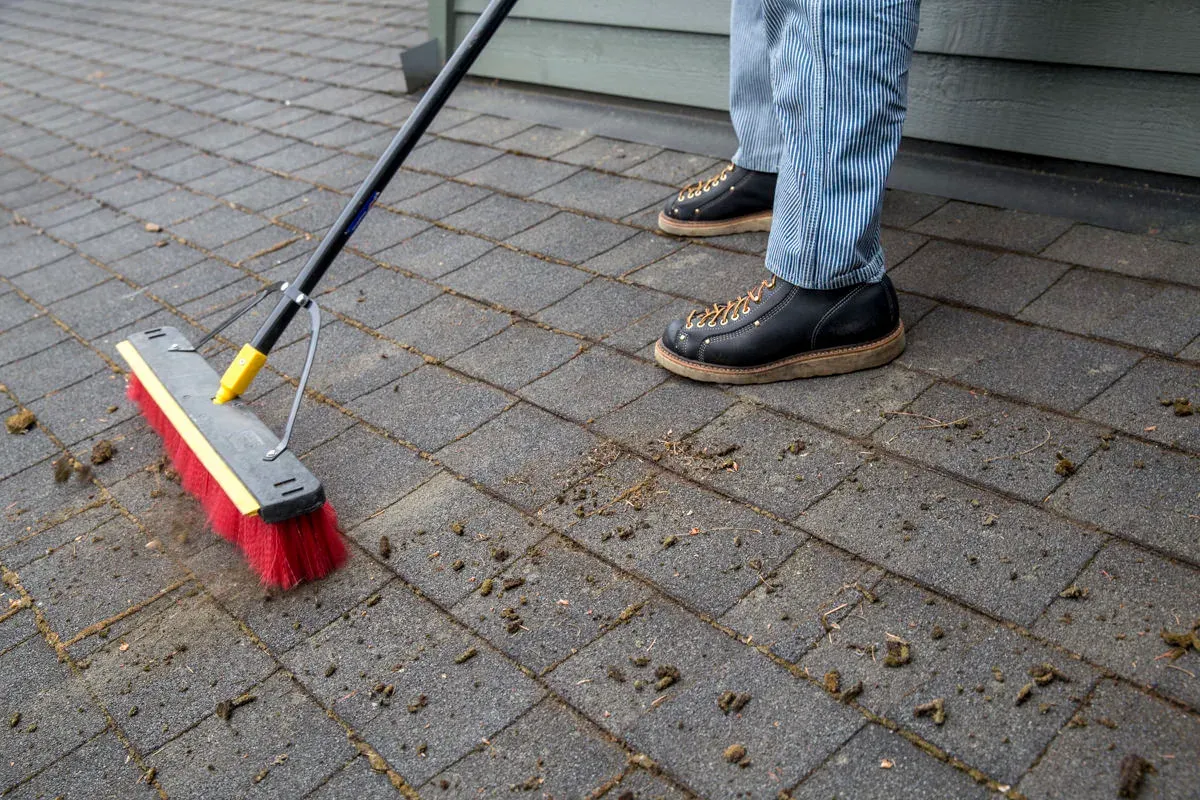
Most of the green film on a shaded north wall or under a run of windows is algae rather than moss. It is flat, has no structure to it, and comes off far more easily than moss does.
It also comes back faster, and it is a useful signal rather than a problem in itself: an elevation growing algae is an elevation that is not drying out. Sometimes the answer is a hedge cut back off the wall, and we will say so.
Usually part of another visit
Very few people book this on its own, and there is no reason to. The ladder is already up for the roof, and the shaded elevation is already the one we are working over. Frames, sills, trim and skylight kerbs get added to a roof visit and take a fraction of the time they would as a separate trip.
Free estimate either way, Monday to Friday, insured and WCB-registered.
Booked alongside roof moss removal most of the time, and if the trough below the frames has gone green too, see gutter moss removal.
How it works
How a Moss Visit Runs
Four steps, and the roof is ours from the moment the ladder goes up. You tell us what you are looking at, we price the roof in front of us, and you hear what we found before we leave.
Tell us what you can see
Your address, the roof covering if you know it, and which slopes have gone green.
A photo from the driveway is worth more than a description. North side, shaded by a big fir, growth thick enough to see from the road — that tells us most of what we need before we arrive.
We price the roof itself
Cedar, asphalt and concrete tile are three different jobs, and the quote reflects which one yours is.
Covering, pitch, height, how far the growth has spread and what stands under the eaves all move the figure. You have it before anything is booked.
The growth comes off carefully
Moss is lifted and brushed off the surface, not driven off with pressure.
We work down the slope so nothing is pushed under the courses, keep the run of water in mind the whole time, and take care around whatever is planted below.
You hear what the roof told us
Standing on a roof shows you things the lawn never will.
A course lifting at the edge, a valley holding damp long after the rest has dried, granules already thin where the growth was heaviest. You get that plainly, with nothing attached to it.
Four steps, and the green is gone.
- You send the address and a photo.
- We send back a price for your roof.
- The growth comes off.
- You know what shape the roof is in.
Send the form or call for a free, no-obligation estimate.
Customer reviews
What customers say
“They are efficient, hardworking, and reliable. I’ll definitely call them again for other services. Highly recommended!”
“Great customer service, and they came quickly..will be using again for sure”
Got questions?
Window Moss Removal — questions
Is this window cleaning?
No. This is the growth on the frame, the sill, the trim and the corners of the opening — the parts a window cleaner is not there for. The glass usually ends up cleaner than it started, but that is a side effect rather than the job.
Why does moss grow on a window frame at all?
Because a frame corner is a shaded, sheltered joint that stays damp. On the north or east elevation, under an overhang, with a hedge close to the wall, that corner may not see direct sun between October and March. That is all growth needs.
Can it damage the window?
Indirectly, and slowly. Growth in a joint holds water against whatever the joint is made of. On painted wood that means the paint film goes first and the wood follows. On vinyl or aluminium the frame itself is fine, but the seal and the drainage slots at the bottom of the frame are not designed to sit packed.
Will you soak the inside of my windows?
No. This is close work with controlled water, not a hose run over the elevation. Old wooden sashes and any window with a failed seal get less water rather than more, and we would rather leave a stain than fill a cavity.
Do you do skylights?
Yes, and the kerb around a skylight is one of the places growth does the most quietly. Water backing up behind a packed kerb has a flashing joint to find rather than a slope to run down.
What about the green film on the north wall under the windows?
That is usually algae rather than moss — a flat film rather than anything with structure to it. It comes off more easily and returns faster, and it is a good sign that the elevation is not drying out.
Can you do this at the same time as the roof?
That is how most of it gets booked. The ladder is already up and the shaded elevation is already the one we are working over, so it is a short addition to a roof visit rather than a separate trip.
Window Moss Removal in Victoria and the surrounding area
Tell us the address and we will get you a price.